
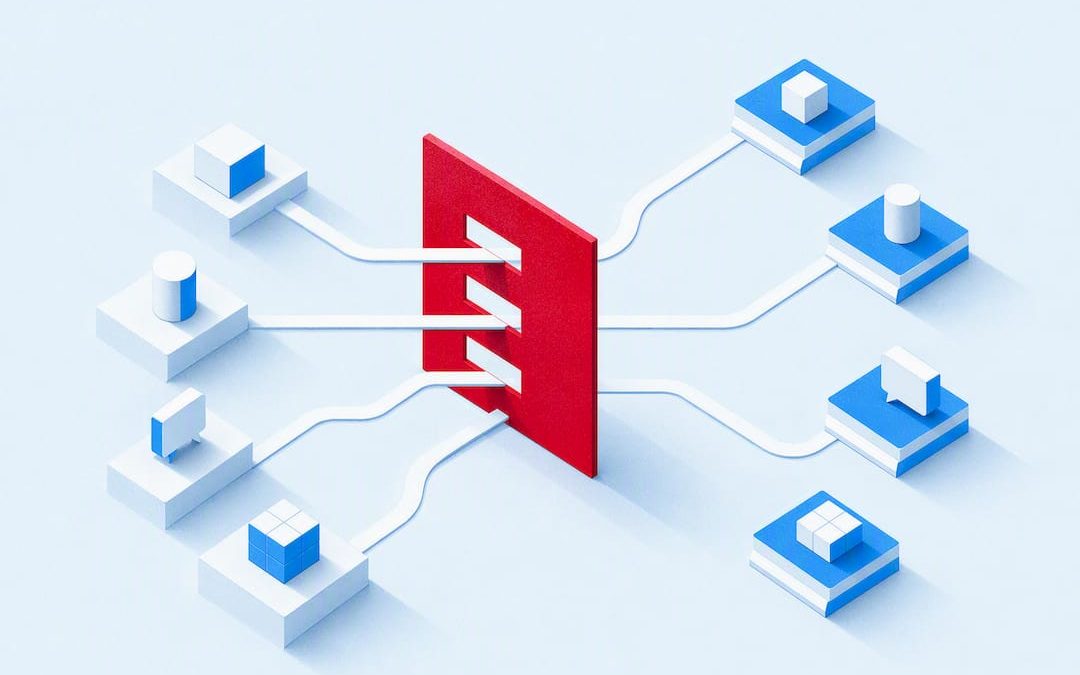
AI call routing uses machine learning and real-time customer data to connect each caller with the person or automation most likely to resolve their issue, cutting wait times and lifting first-call resolution. It works by reading intent, pulling CRM history, and matching that against agent skills and availability, rather than following a fixed queue order. Done properly, it’s a measurable win for both customer experience and agent workload. The implementation detail below covers exactly how to get there.
TL;DR:
- AI call routing leverages caller intent, CRM history, and predictive models to match callers with the best agent or automation, reducing misrouting and wait times.
- Success depends on clean CRM data, full system integration, and ongoing model retraining based on real call outcomes, not just initial setup.
- Implementing AI routing is recommended when call volumes outpace staffing, repeat transfers are high, or first-call resolution remains low, starting with a phased pilot.
- Key KPIs to track include first call resolution, wait time, abandonment rate, and agent utilization, with improvements measured over at least one full month.
- Risks include data silos, incomplete integration, agent resistance, and bias, which require careful planning, transparency, and continuous monitoring to mitigate.
Table of Contents
- What is AI call routing and how does it differ from ACD/IVR?
- How does AI call routing work, step by step?
- Which types of AI routing and platform features actually matter?
- What business benefits and KPIs should you track?
- What are the biggest risks and how do you manage them?
- When should you implement AI call routing, and what’s the rollout plan?
- Vadacom’s view: where NextVoice fits an AI routing rollout
- Fast wins are real, but don’t mistake them for the finish line
- Ready to explore AI-enabled routing with local support?
- Sources
- FAQ
What is AI call routing and how does it differ from ACD/IVR?
AI call routing is a decision engine that decides who or what handles an inbound call, using machine learning models trained on caller intent, account history, and outcome data rather than fixed rules. Traditional automatic call distributors route calls using static logic: caller number, time of day, or a menu selection punched into an IVR. That approach has barely changed since the 1970s. It works fine when call volumes are predictable and requests are simple, but it breaks down the moment a caller’s need doesn’t match the menu they picked.
AI-based call routing adds a layer of judgement on top of that infrastructure. It still uses the ACD to place calls in a queue and the IVR or IVA (interactive voice assistant) to gather early information, but the actual routing decision comes from a model weighing multiple signals at once.
The core building blocks are:
- ACD – manages queues and call distribution mechanics
- IVR/IVA – captures spoken or keyed input and can hold a natural conversation
- NLP engine – interprets what the caller actually wants, not just what they said
- CRM integration – supplies account status, purchase history, and prior tickets
- Decision engine – scores and matches the caller to the best available resource
That’s the real difference from legacy systems: intelligent call routing treats every call as a unique event, not a ticket to be shuffled into the next available slot.
How does AI call routing work, step by step?
Every routed call moves through a sequence of decisions, most of them happening in under a second. Understanding this flow matters because each step is a place where data quality or a missing integration can quietly sabotage the outcome.
- Call arrival and identification. The system captures ANI/DNIS data (the caller’s number and the number dialled) and checks it against existing records.
- Data retrieval. The platform pulls the caller’s CRM profile: account tier, recent tickets, purchase history, and any open cases.
- Intent and sentiment analysis. Through IVR prompts, a voice assistant, or live speech analysis, natural language processing works out what the caller needs and how urgent or frustrated they sound.
- Scoring and matching. The decision engine ranks available agents or automated paths by skill fit, past success with similar issues, and current workload, then predicts the probability of a good outcome for each option.
- Connection and learning. The call connects to the chosen agent or automated flow, and the outcome (resolved, escalated, abandoned) feeds back into the model to sharpen future decisions.
AI call routing evaluates intent, context, behaviour, and predicted outcomes in real time to direct each interaction to the resource most likely to close it out well, not just the next agent in line.
Pro Tip: Ask any vendor demo to show you what happens when CRM data is missing or stale. A routing engine that degrades gracefully to sensible defaults is worth far more than one that only shines in a clean-data showcase.
The feedback loop in step five is where most of the long-term value sits. A model that never learns from outcomes is really just a fancier IVR menu.
Which types of AI routing and platform features actually matter?
Vendors describe their routing engines in overlapping ways, and it’s easy for a buyer to get lost in feature marketing without understanding what each type actually does.
Intent-based routing reads what the caller says or types and matches it to a category (billing, technical fault, cancellation) before anyone picks up. Predictive routing goes further, using historical outcome data to estimate which specific agent gives that caller the best chance of resolution, not just the right department. Skill-enhanced routing layers in certifications, language ability, and product specialisation. Sentiment-based routing detects frustration or urgency in tone or word choice and escalates accordingly. Omnichannel routing applies the same logic across phone, chat, email, and social, so a customer who emailed yesterday doesn’t repeat their story to a voice agent today.
Analysts describe this broader shift as moving from process-centric to personalisation-centric routing, where the goal is prioritising unique caller value and complexity over simply keeping queues moving.
Before signing anything, run vendor claims against a capability checklist:
- Native or well-documented CRM integration (not a bolt-on API)
- Real-time analytics dashboard with exportable KPI data
- Dynamic decisioning that updates mid-call, not just at intake
- Access to workforce management data (agent skills, shift patterns, current load)
- Callback and estimated-wait-time options for overflow periods
Anything missing from that list becomes a manual workaround your team inherits later.
What business benefits and KPIs should you track?
The business case for AI call routing rests on a handful of measurable numbers, and vague promises about “better customer experience” won’t survive a budget review. Track these from day one of any pilot:
| KPI | What it measures | Why it matters for routing |
|---|---|---|
| First call resolution (FCR) | % of issues solved without a callback or transfer | Direct signal that routing matched skill to need |
| Average handle time (AHT) | Time per call from connection to close | Falls when agents get calls suited to their strength |
| Wait time | Time in queue before connection | Should drop as routing reduces misrouted transfers |
| Abandonment rate | % of callers who hang up before connecting | Early warning sign of queue or routing problems |
| CSAT | Post-call satisfaction score | Lagging but critical outcome measure |
| Agent utilisation | % of paid time spent on productive work | Shows whether load balancing is actually working |
Intelligent routing improves first call resolution and reduces wait times by combining intent recognition with interaction history and skill matching, rather than leaving outcomes to whichever agent happens to be free.
For a pilot, set targets against your own baseline rather than an industry benchmark plucked from a vendor’s case study. Set a realistic first target for improving First Call Resolution (FCR) measured over a full month to smooth out daily noise. Structure the pilot around one queue or one call type, hold everything else constant, and give it enough volume to be statistically meaningful before drawing conclusions.
What are the biggest risks and how do you manage them?
AI call routing fails for predictable reasons, and most of them show up in the planning stage rather than the technology itself.
- Bad or siloed CRM data produces bad routing decisions no matter how good the model is. Clean and consolidate customer records before go-live, not after.
- Integration gaps between the routing engine, ACD, and CRM create blind spots where the model is deciding without full context.
- Agent resistance builds when staff feel evaluated by an opaque algorithm rather than supported by it. Explain what the system optimises for and involve team leads early.
- Bias in training data can quietly disadvantage certain caller segments or agent groups if historical outcome data reflects past inequities rather than genuine skill differences.
- Privacy and consent gaps around call recording and data use create legal exposure that varies by jurisdiction, so confirm your recording and retention practices meet local requirements before scaling.
- No rollback plan turns a bad model update into a customer experience crisis with no quick fix.
AI call routing depends on machine learning and natural language processing to connect callers with the right resource, but the technology only delivers if the business manages the surrounding implementation and change process with equal care. Build in regular model audits, a defined escalation path for disputed routing decisions, and a documented rollback procedure before you scale past a single pilot queue.
When should you implement AI call routing, and what’s the rollout plan?
You’re ready to move when the signals are already visible in your current metrics: call volume that outpaces headcount growth, a high rate of repeat transfers between departments, or an FCR that’s stuck below where it should be given your team’s skill level. If those symptoms sound familiar, a phased rollout beats a big-bang deployment every time.
- Discovery (2 to 4 weeks). Audit CRM data quality, map current call flows, and agree on the two or three KPIs the pilot must move.
- Pilot (4 to 8 weeks). Deploy on a single queue or call type, keep a human fallback path live, and measure FCR, wait time, and abandonment weekly.
- Scale (ongoing). Extend to additional queues once the pilot hits its targets, expanding CRM and workforce data feeds as coverage grows.
- Optimise (continuous). Retrain models on new outcome data, refine skill tags, and retire routing rules that no longer earn their keep.
A phased pilot approach reduces risk: start with one queue, prove the metrics move, then expand with confidence rather than hope.
Pro Tip: Staff the pilot phase with your most change-ready team lead, not your busiest one. Early friction gets amplified fast, and you want someone who’ll flag problems rather than quietly work around them.
Vadacom’s view: where NextVoice fits an AI routing rollout
NextVoice is designed as a cloud business phone platform on telco-grade infrastructure spanning multiple availability zones, so scaling a routing pilot can avoid new hardware or a big upfront spend. The platform includes core communication features such as extension dialling, call transfer, individual call-flow management, and in-app recording.
An optional AI Call Intelligence add-on can provide call recording and analysis for deeper insights. Combined with extensive local support experience, the offering provides:
- A scalable base to run a routing pilot without heavy IT lift
- Configurable call flows to test intent-based routing early
- Support during setup and as requirements change
- A path to add AI-driven call analysis when needed
Fast wins are real, but don’t mistake them for the finish line
AI call routing genuinely delivers quick, visible improvements to FCR and wait times in the first few weeks of a well-run pilot. That’s the easy part, and it’s also where most buyers stop paying attention.
The harder, more valuable work is the ongoing discipline: feeding clean data back into the model, retraining on real outcomes, and resisting the urge to declare victory after one good month. Treat the initial gains as proof of concept, not proof of completion, and keep measuring long after the excitement wears off.
— Stuart
Ready to explore AI-enabled routing with local support?
NextVoice provides a way to move from static call queues to AI-informed routing without replacing your phone system or committing to a major infrastructure project. NextVoice runs on cloud architecture across multiple availability zones, providing scalability without upfront hardware costs; optional AI Call Intelligence adds call analysis when ready.
If your business is wrestling with rising call volumes, repeat transfers, or an FCR that’s plateaued, that’s exactly the readiness signal this article flagged earlier. A local support team is available to discuss a discovery call and a staged pilot suited to your current call flows and CRM setup. Start by visiting Vadacom to see how NextVoice fits your contact centre, or check the AWS-backed cloud infrastructure behind the platform if scalability and resilience are front of mind for your IT team.
Sources
- Intelligent call routing: Benefits & How It Works | Salesforce
- AI Call Routing | NICE
- AI call routing: What it is, how it works and what it means for CX | TechTarget
- Intelligent call routing: How it works and best practices | Zendesk
FAQ
Is AI calling illegal?
No, using AI for call routing or automated customer service is legal, but recording, consent, and data-handling rules vary by jurisdiction, so confirm your local requirements before deploying voice AI or call recording features.
What is AI routing?
AI routing is a system that uses machine learning and real-time data, including CRM history and caller intent, to direct each interaction to the person or automation most likely to resolve it, rather than following a fixed queue order.
What is automated call routing?
Automated call routing covers any system, from basic rule-based ACDs to modern AI-driven engines, that directs calls without a human operator manually connecting each one; the AI-based versions add intent analysis and predictive matching on top of the older rule-based logic.
How do you set up an AI phone call flow?
You start by integrating your CRM and ACD with a routing platform, defining the KPIs you want to move, and piloting on a single queue before scaling. Platforms like Vadacom’s NextVoice let you configure call flows and add AI Call Intelligence once your data and integrations are ready.